Make Families Great Again–An Author Interview
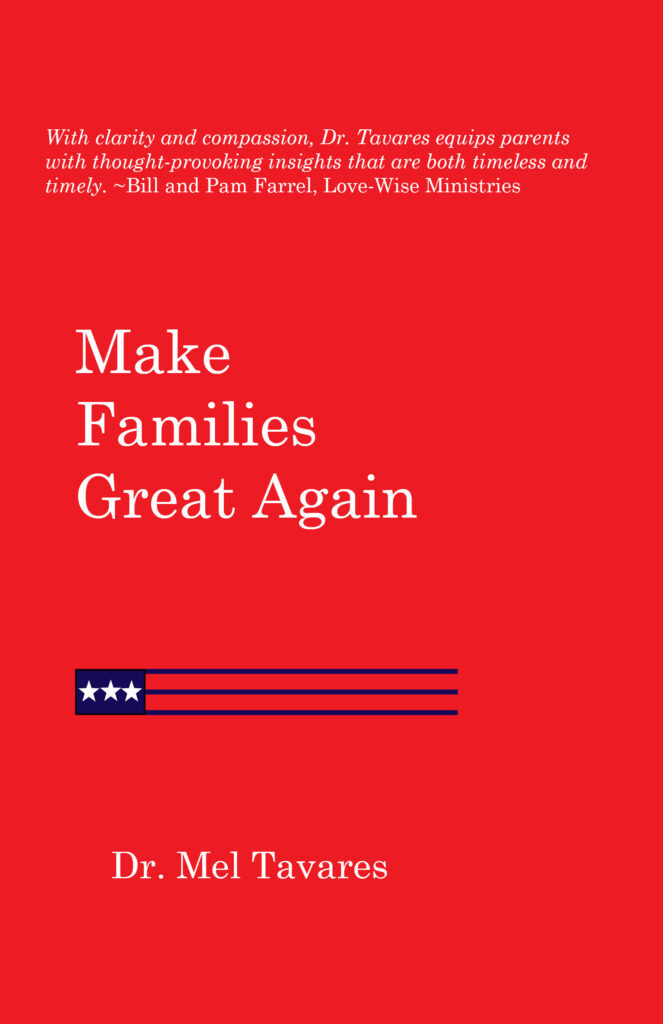
I recently had the privilege of interviewing author, speaker, and teacher Dr. Mel Tavares. Her new release Make Families Great Again is creating a stir–reminding readers of the importance of that which God ordained from the beginning.
Indeed, that which the enemy seeks to destroy.
I hope you’ll enjoy this precursor to Dr. Tavares’ book, and I encourage you to pick up a copy of Make Families Great Again, available now on Amazon.
Introduction

Tell us why you are particularly qualified to write this book.
I have 35+ years background working with families. Professionally, I worked with families as a Dept. of Education leader and as a mental health counselor.
I’ve served concurrently in ministry–as a Christian educator, youth group director, moms’ group leader, women’s ministry leader.
Additionally, I did my doctoral work around the topic of ‘Understanding the Challenges of Today’s Youth Culture.’ I’ve been in the belly of the whale for decades and have insight that other parents / grandparents may not have but would do well to gain.
Why do you write this book specifically to those in the United States?
While the biblical principles apply globally, I wrote to those in the U.S. because we are facing a unique set of circumstances. While the global issues are of concern, I felt strongly the need to sound the trumpet to my fellow Americans and offer hope to parents / grandparents.
You write from a biblical worldview yet offer many statistical facts. Why is this important?
It is human nature to be dismissive and say “Not an issue for my family,” but when stats are given, people pay attention.
For example, I cite a statistic of there being a 31% increase in teen mental health problems and that 3 million teens self-report having had serious suicidal ideation. That should cause every parent and grandparent to ask the question, “Is it possible that my kids are among the 3 million? And, if not, are they struggling secretly with things of which I’m unaware?”
State of Homes

Perhaps quantity time isn’t available 7-days a week, but how can parents ensure there are at least daily snippets of “quality time”? What difference does this make?
My recommendation is to make every effort to be available as soon as their children are done with school / extra-curricular activities and set devices aside.
Quickly engage with them (snacks work great) and ask questions. Yes / no questions should be avoided. In other words, don’t ask “How was your day?” You’ll get short answers most of the time, such as “Fine.”
Instead, try something like “What was the hardest part of today?” If you know they’ve been dealing with a difficult schoolmate (Let’s say John), ask specifically, “How’d it go with John today? Any problems?”
If you aren’t quick about being available and engaging them, someone else will. Typically online. By the time they’ve texted with friends or become engaged with gaming or scrolling, they’ll have little interest in conversations later.
Also, meal time is great. If there are no other opportunities, prioritize dinnertime. Never underestimate the power of a device-free dinner table!
Why are celebrations and traditions important in the home?
Celebrations and traditions serve to stabilize kids and give them security in a chaotic world. Beyond this, they add to the memory bank children carry into adulthood.
Whether they carry the traditions on to the next generation is inconsequential. The important aspect is they’ve got impactful memories to carry with them for a lifetime.
For example, we used to celebrate Ground Hog Day with cards, a cake, gifts, and a BBQ. I started this to break up the long Maine winters. To this day, I still send messages and invite the local kids / grands to celebrate Ground Hog Day. It’s especially fun when they text me first! It’s a silly tradition but one they’re passing down to the next generation.
Why is an understanding of our country’s biblical roots important in pressing forward to make families great again, beginning at home?
Our country is headed in the wrong direction. Biblical values taught and lived out in day-to-day life at home will build a generation of young adults who have morals and values that align with the Bible.
In order for our country to thrive, we need business owners, law makers, and public service workers to do things God’s way. Laborers need strong work ethic. Making progress in this direction isn’t promised to be easy, but we can do it, one household at a time.
What is a scripture that reminds us to cherish the moments, not banking on the notion that “there’s always tomorrow”?
James 4:13-17 warns us not to boast about tomorrow because we do not know what tomorrow will bring. James reminds us that our life is like a vapor and is a sober reminder that we must not assume we have plenty of time.
State of Schools

Define “biblical worldview” and “secular worldview.”
Holding a biblical worldview means looking at every aspect of our lives and world events, and cultural ‘norms’ through the lens of Scripture. Anything other than viewing life through the lens of Scripture is a secular worldview.
What are the possible dangers for families in public schools with regard to character education?
The danger is that not all educators hold the same worldview. If we consider the word ‘fairness’ for example, as Christians we would consider fairness from God’s perspective. Yet a person speaking from the secular worldview may well consider that treating every person equally is the only fair way.
In other words, the student who studied for 10 hours for a test to achieve an A is equal to the student who didn’t study and stayed up all night gaming.
Another example would be concerning the word ‘diversity.’ God created us all diverse and unique, yet has boundaries and parameters in place as to how we are to express the diversity.
We may understand that, but an educator or educational system coming from a secular worldview doesn’t agree with biblical standards and adheres to diversity being all inclusive and all forms of expression are acceptable. There are no boundaries.
With the majority of children in the U.S. being educated in public schools, what scripture serves to encourage or exhort parents in a post-modern, often hostile to biblical principles, society?
Proverbs 22:6 serves as a stern reminder that we are to train up our children (and grandchildren). Not the school systems. Not neighbors. Not sports coaches. We are to do the job.
If we don’t someone else will and chances are, they hold a secular worldview, not a biblical one!
State of Internet

Explain how the use of social media is a double-edged sword.
The strength of social media is the speed and ease of communication. We can stay in touch with friends and family, quickly invite people to a party, and catch up on the news.
The downside is the speed and ease of communication also encourages rapid responses that allow bullying, predatory behaviors, and nonsensical arguments.
With the various forms of social media available, what is the greatest danger to our young people and why?
Bullying, especially now with the sophisticated AI tech. A bully can put out slanderous rumors, comments, and photos in a matter of seconds. Within a few hours, it can do so much damage that youth become hopeless, increasing the possibility of engaging in suicidal ideation or, worse, its actuality which, sadly, is on the rise.
What warnings for parents might you offer regarding what they post on social media? Why is this important?
Now we have AI that can take photos and change them quickly. The more fodder we give, the higher the probability of things becoming twisted. Posting pictures and information also gives predators information about where kids go to school, extra-curricular locations, home locations, and the like–all of which can result in abductions and worse.
What scripture reminds us why it’s important to guard our hearts with regard to the use of the internet?
Philippians 4:8 comes to mind. We are to think of whatever is pure, lovely, and wholesome. Much of what is on the internet is in direct conflict with these principles.
State of Minds

Our children’s mental and emotional health is declining—with depression, isolation, and suicide at an all-time high. Why is this?
Innocence is stolen, bullying is pervasive, conflicting messages between what parents and the church teaches versus the internet and schools, negative messaging builds a foreboding sense of confusion and hopelessness.
Why are our children experiencing more and more a “loss of innocence”? How can we help them regain their innocence, or is that not even possible?
It’s never too late to start doing the right thing. God is a God of redemption and restoration.
That said, kids can’t unsee what they’ve seen. It’ll take a lot of effort to create new neuropathways for positive thoughts, with biblical values to moving to the forefront, but it is possible.
Helping them focus on truths that affirm their worth from God’s standpoint while giving them concrete evidence showing why much taught from a secular worldview is detrimental will help.
What are the warning signs one’s child is being bullied?
They will often withdraw, perhaps stop talking and / or eating, and will engage in avoidance behaviors such as skipping school. Sometimes they will begin bullying as a defense mechanism.
What are the dangers of social media influencers?
They don’t share the core values and often don’t portray the reality of their lives. They photoshop pictures and videos, and they photoshop their lives. They create a fantasy life that looks real, yet is unrealistic and impossible to achieve. Yet, kids believe it’s authentic.
What hope can one find in the Bible regarding the state of our children’s minds, and how do we encourage our kids to apply this scriptural truth—to take up their “sword of the Spirit,” so to speak?
Psalm 139:14 comes to mind–reminding kids they are fearfully and wonderfully made by God, designed for a purpose.
Conclusion
Sometimes the state of our world makes us feel hopeless. Is making our families great again even possible?
Parents and caregiving grandparents must act intentionally each day, providing the setting for open conversations.
Adding celebrations and traditions will help stabilize kids and give them a sense of belonging.
It is important to stay aware of what is happening in our children’s culture. What social apps have released, what is trending, what’s being taught in schools, popular movies and music, and the like. If a parent or grandparent is unaware, it’ll be impossible to have an impactful and transformative conversation with them.
From your experience—as an educator, a mental health provider, a mother, and grandmother—offer us a word of encouragement (or exhortation) from scripture to help us make our families great again.
There are many Scriptures that speak to the role of being a watchman. We are the watchmen in our families. It is our responsibility to consistently monitor what is going on, to sound the alarm when needed.
In doing so, many calamities will be avoided and lives will be saved.
About the Author:
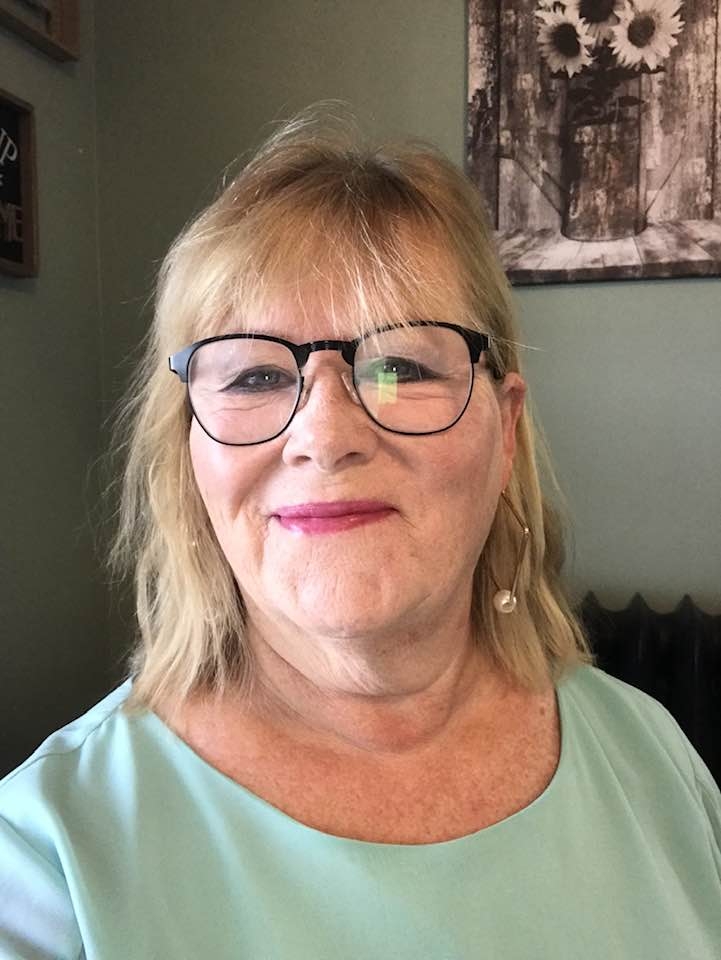
Dr. Mel Tavares is an award-winning author of books, articles, devotionals, and short stories. She is the Acquisitions and Managing Editor of Arise Daily; a digital daily devotional and 2025 recipient of the Award of Excellence given by the Evangelical Press Association (EPA). Dr. Mel is also the recipient of the Advanced Writers and Speakers Association (AWSA) 2025 National Member of the Year award,
Mel holds a Doctor of Ministry in Pastoral Care and Counseling and has 35 years of experience working with families in education, rehabilitation, and ministry. Mel is a frequent event speaker and media guest.
Her latest book release is ‘Make Families Great Again’, and is being used as a tool to sound the trumpet across America, alerting parents and grandparents of the truths of today’s youth culture. It is up for several awards and is being highlighted in 2026, in conjunction with America’s 250th birthday and she welcomes opportunities to speak and highlight the message of the book.
She and her husband live in Middletown, Connecticut. They have seven adult children and eleven grandchildren.
Resources can be found on her website: https://www.drmeltavares.com/ or you can email her directly at drmeltavares@gmail.com.